
Updated in November of 2026
Dental implants are considered one of the best tooth replacement options because they mimic your tooth’s roots and provide aesthetic beauty and functionality. A periodontist or oral surgeon can precisely place a dental implant into your jawbone, and once it heals, we can add a dental crown or other restoration, depending on how many teeth you’re missing.
However, what happens if you don’t have enough jawbone density to support a dental implant? Keep reading to learn more.
Why Does a Dental Implant Need Enough Jawbone?
The American Dental Association outlines the dental implant procedure as follows:
- Implant placement — Your trusted periodontist or oral surgeon numbs your mouth and then places a titanium post into your jaw. This implant mimics your tooth’s roots and will later support a dental crown, bridge, or denture.
- Healing — During this phase, osseointegration occurs. This process happens when your jawbone and newly placed implant bond, giving you a stable foundation for your new teeth. If your jawbone is too weak to support the dental implant, it could lead to implant failure. It can take up to six months for osseointegration to occur. During this time, we’ll provide a temporary crown or prosthetic until your implant heals.
- Abutment and impression — Once healed, an abutment, or connector, is placed on the implant. It will serve as the base for your new tooth. We’ll take an impression and use it to create your crown.
- Final restoration — The last step involves securing your crown, bridge, or denture in place and making any necessary adjustments.
What Causes Jawbone Loss?
Several different factors can affect your jawbone density, including the following:
- Osteoporosis and other medical conditions
- Certain medications
- Age or genetics
- Smoking or excessive alcohol consumption
- A diet low in calcium and vitamin D
- Tooth loss
- Gum disease
What Is a Bone Graft for Dental Implants, and How Does the Procedure Work?
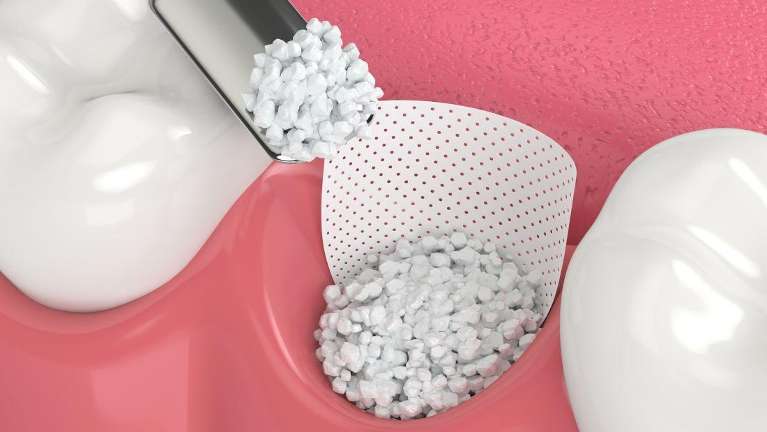
Not enough bone for dental implants? If your bone density is too low for dental implants, you may qualify for a bone grafting procedure. This generally successful dental treatment involves the following steps:
- A skilled periodontist or oral surgeon will perform the procedure, and the first thing they’ll do is completely numb the bone grafting site.
- A bone sample will be placed wherever you need implants. According to the Cleveland Clinic, the material for a bone grafting procedure can come from your own bone or a human donor bone. However, it can also be animal-derived or synthetic.
- Your periodontist or oral surgeon will then stitch the bone grafting site.
- Your incision will heal within a week or two, but it usually takes several months for your bone graft to heal enough to support dental implants.
If you need to replace one or more of your upper back teeth, your periodontist or oral surgeon may recommend a sinus lift; this specialized type of bone graft involves gently lifting your sinuses and adding bone material to add enough height to support a dental implant.
Who Does the Grafting, and What Does Antelope Creek Do?
Our dentists don’t perform bone grafting procedures, but we’ll happily refer you to a skilled periodontist or oral surgeon. This same team will place your dental implants when the time comes. Once your mouth heals, you’ll come back to our office where we’ll place your custom crown, bridge, or denture.
How Long Does a Bone Graft Take to Heal Before an Implant?
After your bone grafting procedure, your mouth will need some time to heal; here are the general healing guidelines you should be aware of:
- Gums — Your gums should heal in about one week.
- Bone graft — The bone graft area requires at least three months to heal, and large grafts may take as long as 9-12 months to heal. For many patients, a dental implant can be placed within 6-12 months after the graft heals.
What Are the Risks of a Bone Graft?
Although the Cleveland Clinic states that bone grafting is generally successful and has limited risks, results vary.
There are some potential complications to keep in mind, including:
- Infection
- Severe bleeding
- Nerve damage
- Bone graft rejection
- Anesthesia complications
If you experience worsening pain or swelling after the first week, pus, or gum recession, you should contact your periodontist or oral surgeon right away. If you smoke or have certain medical conditions, it can increase your risk of failure.
What Are the Options if a Graft Isn’t Right for Me?
If you cannot undergo a bone grafting procedure, your dentist may recommend other tooth replacement options, including a dental bridge, partial denture, or full denture.
Caring for Your New Teeth
Once your dental implant procedure is complete and you’re enjoying your new smile, here are some care tips to keep in mind:
- Brush twice daily and floss at least once.
- Visit your Lincoln dentist twice a year for a checkup and cleaning.
- Avoid chewing on ice or other hard objects.
- Wear a mouthguard if you participate in sports.
Questions about Tooth Replacement in Lincoln, NE?
If you want more information about bone grafting and dental implants in Lincoln, NE, or if you find yourself searching “sinus lift Lincoln, NE” or “jawbone loss implants,” our expert dental team is ready to take your call! We’ll refer you to a periodontist or oral surgeon who can help you make the best tooth replacement decisions based on your oral health needs.
Contact one of our two dental offices to schedule an appointment today.